Most riding jacket armour come with armour. Most riders never check what that armour actually is.
Foam pads stuffed into pockets. Generic “armour” with no certification. Level 1 protectors that meet the minimum standard but perform far below what a serious crash demands.
This guide explains exactly what CE Level 2 riding armour means, why it matters, how to check if your riding jacket armour has it — and what to do if it doesn’t.
CE Certification — What the Levels Mean
Level 1 (CE EN 1621-1)
The minimum standard for motorcycle riding jacket armour sold in India and most markets. A Level 1 protector must transmit no more than 18 kN of average force on impact. This is the baseline — and many budget riding jackets armour include only this level of protection, or generic foam that is not CE-certified at all.
Level 2 (CE EN 1621-1)

A significantly higher standard. Level 2 protectors must transmit no more than 9 kN of average force — exactly half the Level 1 limit. In real-world crash scenarios, this difference is not trivial. The shoulder and elbow are the most common impact zones in a motorcycle crash. Level 2 protection in these zones significantly reduces the risk of joint fractures.
Back Protector (CE EN 1621-2)
Back protectors have their own certification scale: Level 1 (≤18 kN average) and Level 2 (≤9 kN average). The back protector is the single most important piece of armour in a motorcycle crash — spinal injuries are catastrophic and often irreversible.
Where Armour Goes in a Riding Jacket armour
- Shoulders: protect the shoulder joint and collarbone — the first point of contact in most low-side crashes
- Elbows: protect the elbow joint — extremely common impact zone in crashes at all speeds
- Back: the largest impact zone — a full-back CE Level 2 protector is a significant upgrade from a small lumbar pad
- Chest (optional in many jackets): protects the sternum and ribs — look for CE certification on chest inserts specifically
How to Check If Your Jacket Has Level 2 Armour
Remove the armour inserts from your jacket. Look for a label or stamp on each insert. It should state:
- “CE EN 1621-1 Level 2” for shoulder and elbow protectors
- “CE EN 1621-2 Level 2” for back protectors
If there is no label, or if the insert is simply foam without certification markings, it is not CE Level 2. Many jackets — including some premium-branded ones — include Level 1 inserts as standard and require you to upgrade to Level 2 separately.
Upgrading Your riding Jacket to Level 2 Armour

If your riding jacket armour currently has Level 1 inserts or uncertified foam, upgrading is straightforward. Level 2 armour inserts are sold separately and designed to fit standard armour pockets.
What to check before buying replacement inserts:
- Pocket size: measure your riding jacket armour pockets before ordering inserts. Shoulder and elbow pocket dimensions vary between manufacturers
- D3O vs hard shell vs foam: D3O is a soft, flexible material that hardens on impact. Hard shell is rigid plastic. For day-to-day wear comfort, D3O-type soft armour in Level 2 is the best balance of protection and wearability
- Back protector fit: full-back protectors cover more area than small lumbar pads. Ensure your jacket has a full-back pocket before buying a full-back insert
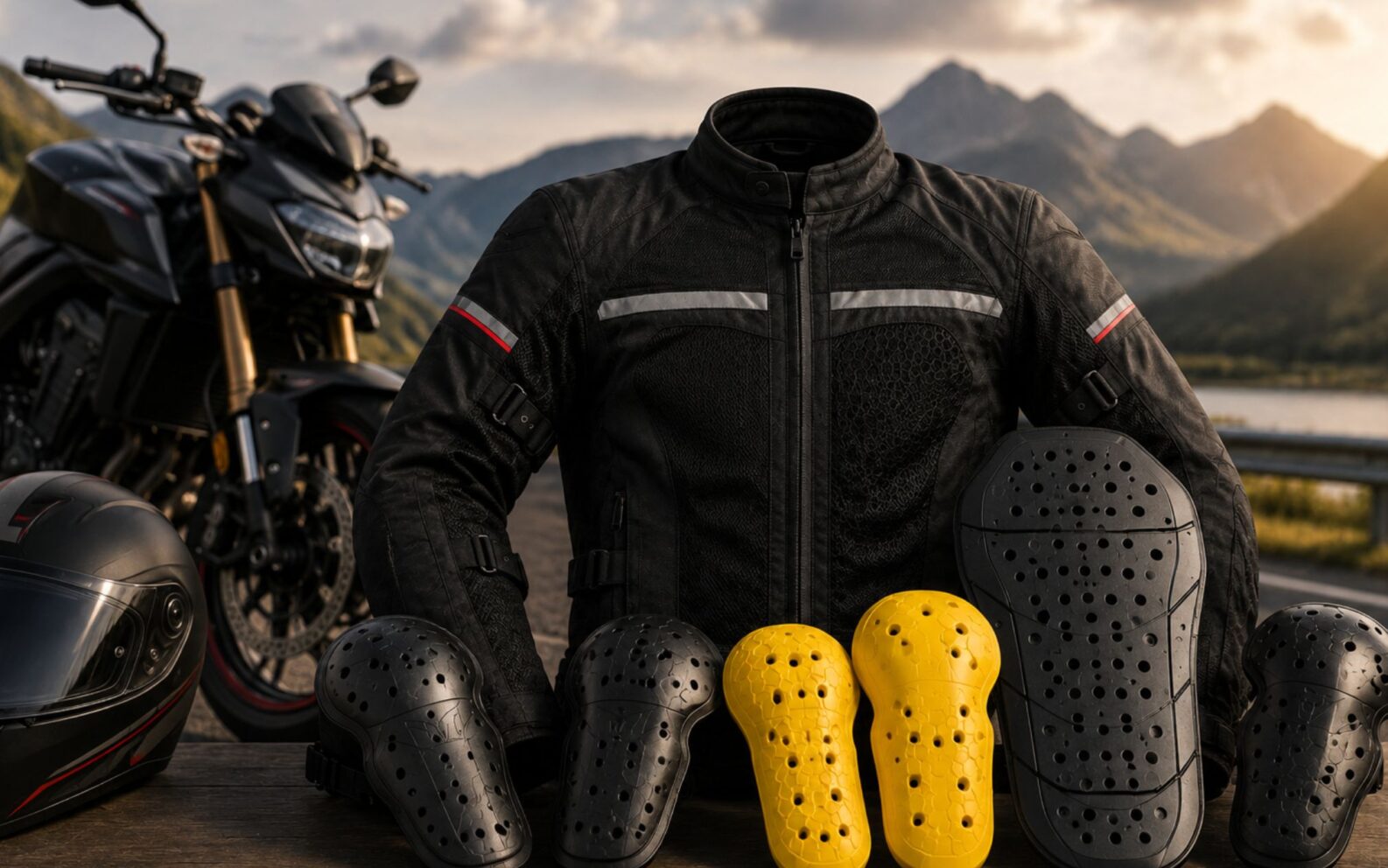
TrekNRide Riding Jacket armour Protector Set
The TrekNRide riding jacket armour jacket protector set provides CE-certified Level 2 protection for shoulders, elbows, and back in a single purchase. The inserts are made from impact-absorbing material that remains flexible and comfortable during long rides, hardening only on impact. Compatible with standard jacket armour pocket sizes across most Indian and European riding jacket armour brands.
FAQ — Riding Jacket Armour
Can I add Level 2 armour to any riding jacket?
You can add Level 2 inserts to any riding jacket armour that has dedicated armour pockets at the shoulders, elbows, and back. Measure your jacket’s existing pockets before purchasing inserts to ensure the correct fit. Jackets without armour pockets cannot accept standard inserts.
Is Level 2 armour noticeably more uncomfortable than Level 1?
Modern Level 2 armour — particularly D3O and similar soft-body armour materials — is not meaningfully more uncomfortable than Level 1. Older hard-shell Level 2 inserts were rigid, but current designs are flexible until impact.
How often should I replace riding jacket armour?
CE-certified armour degrades over time with UV exposure and repeated flexing. Most manufacturers recommend replacing armour inserts every 5–7 years, or immediately after any significant impact — even one where the jacket appeared undamaged externally. Impact can degrade the insert’s protective properties without visible damage.
Is a back protector worth buying separately?
Yes. The back protector is the most important piece of armour in a riding jacket, and most jackets include only a basic lumbar pad or thin insert at Level 1. A standalone CE Level 2 back protector is one of the highest-value safety upgrades available for under ₹2,000.