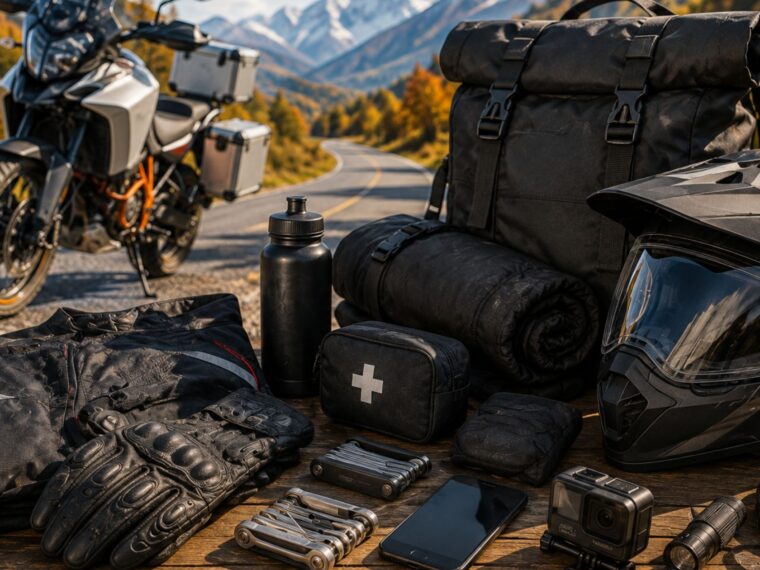
You packed everything carefully the night before. Tent, extra clothes, phone charger, documents. You strapped your bag to the bike and hit the highway — and then it started raining.
By the time you reached the next dhaba, your clothes were wet, your charger was sparking, and your passport was soggy. Sound familiar?
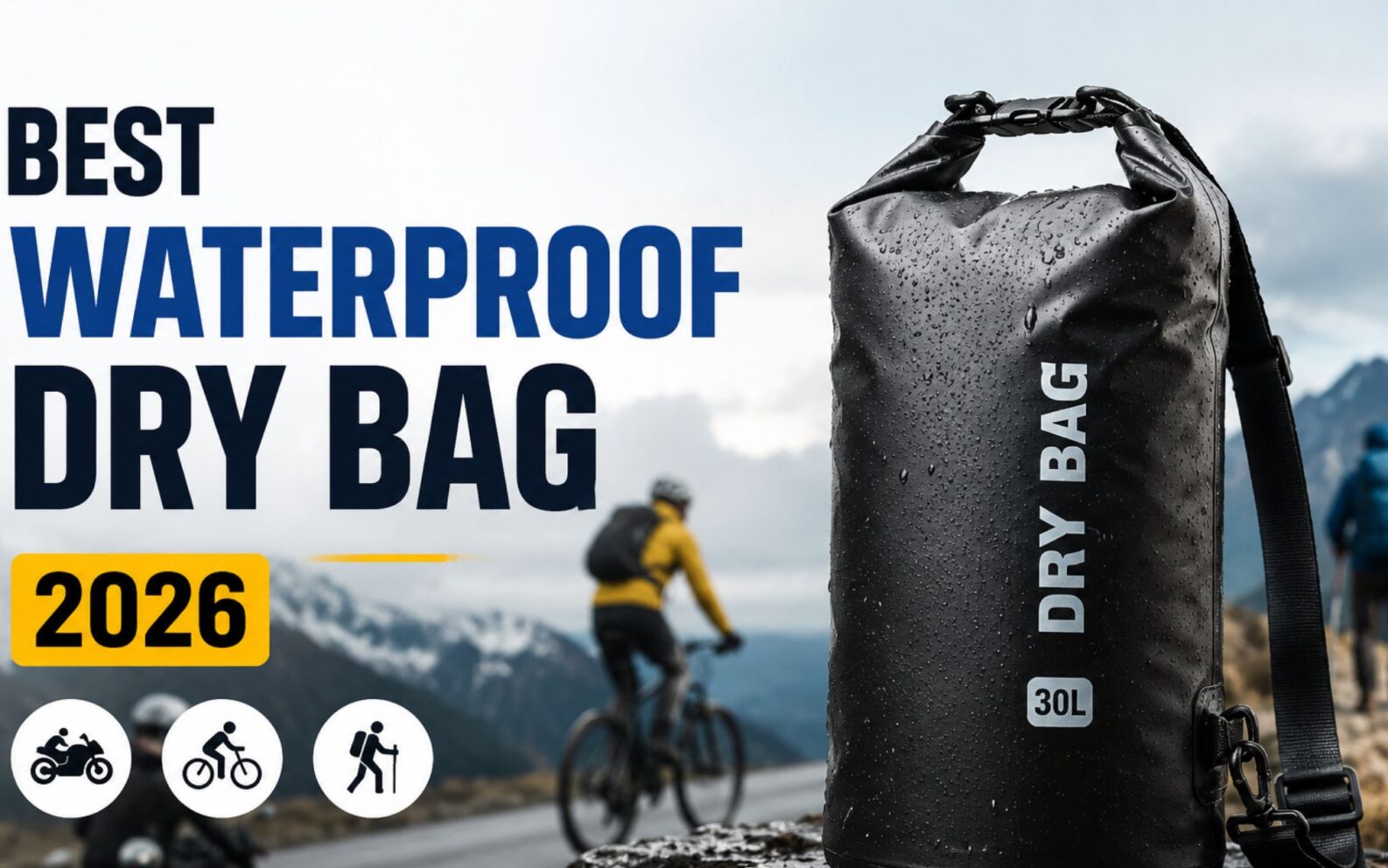
This is the problem a waterproof dry bag solves. Not a “water-resistant” bag. Not a bag with a rain cover. An actual waterproof dry bag — the kind that gets dunked in a river and comes out with everything inside bone waterproof dry.
In this guide, we’ll cover everything you need to know: what a waterproof dry bag is, which size to choose, how to use it correctly, and which options work best for Indian bikers, cyclists, and trekkers.
What Is a Waterproof Dry Bag — And How Is It Different from a Waterproof Bag?
This is the most common confusion when buying gear online.
A “waterproof Dry bag” usually means the outer fabric has a DWR (Durable Water Repellent) coating. It resists light rain. It does not survive submersion, heavy monsoon downpours, or river crossings.
A waterproof dry bag is different. It uses welded or taped seams and a roll-top closure that you fold over 3–4 times and clip. When sealed correctly, a proper dry bag is completely waterproof — rated IPX6 or IPX8 depending on the model. You can submerge it. You can ride through a cloudburst. Everything inside stays dry.
For Indian riding conditions — monsoon season, river crossings in Himachal, sudden rain on the highway — a dry bag is not a luxury. It is essential gear.
waterproof Dry Bag Sizes — Which One Do You Need?
5L Dry Bag — The Daily Carry
Perfect for: Phone, wallet, documents, small camera, snacks. Fits inside a tank bag or handlebar bag. Best choice for city bikers and cyclists who want basic waterproof protection for their valuables without adding bulk.
10L Dry Bag — The Touring Standard
Perfect for: One full change of clothes, small electronics, power bank, first aid kit. The most popular size for weekend motorcycle tourers and cyclists doing single-day or overnight rides. Fits neatly as a saddle bag liner or in a pannier.
20L Dry Bag — The Expedition Bag
Perfect for: Multi-day clothing, sleeping bag liner, electronics, food supplies. The go-to choice for overlanders, long-distance tourers, and trekkers doing 3–7 day routes. Can be strapped directly to a luggage carrier or used inside a large saddle bag.
30L+ Dry Bag — Serious Overlanding
For river-crossing overlanders, Himalayan bike packers, and trekkers doing week-long expeditions. At this size, the dry bag becomes your primary luggage, not a liner.
How to Use a waterproof Dry Bag Correctly

Most people buy a dry bag, stuff their items in, fold the top twice, and wonder why water got in. Here’s the right technique:
- Pack your items inside the bag, leaving 6–8 cm of space at the top
- Squeeze out as much air as possible before rolling
- Roll the top down firmly at least 3–4 times — not 1, not 2
- Clip the buckle across the folded top
- Store the bag with the buckle facing up when possible
The roll-top seal is what makes a dry bag work. Fewer than 3 rolls and water will find its way in during heavy rain. 4 rolls is the minimum for monsoon-level waterproofing.
Best Dry Bag Uses for Indian Bikers
As a Saddle Bag Liner
Even the best saddle bags have stitched seams that can leak in prolonged rain. Line your saddle bag with a 10L or 20L dry bag to keep your clothes dry without buying a new saddle bag.
As a Tank Bag Compartment
Use a 5L waterproof dry bag inside your tank bag to protect your phone and documents while keeping them accessible.
As a Handlebar or Pannier Liner
For multi-day touring setups, a 20L dry bag inside each pannier means your gear survives river crossings and monsoon riding without worrying about seam leakage.
For Cyclists: Frame Bag or Rear Rack Use
On a bicycle, a 5L or 10L dry bag attached to a rear rack gives cyclists weatherproof cargo storage without the weight of a hard case.
What to Look For When Buying a Dry Bag in India

- IPX Rating: Look for IPX6 (heavy rain/spray proof) minimum. IPX8 means fully submersible.
- Material: 500D PVC is durable for touring. Lighter nylon options suit cyclists.
- Seams: Welded or taped seams only — stitched seams will always leak eventually.
- Roll-top closure: 3 full rolls minimum. D-ring at the top for strapping to a carrier.
- Capacity: Buy one size bigger than you think you need — you will fill it.
FAQ — Waterproof Dry Bags
Can I use a dry bag as a replacement for a saddle bag?
A dry bag can work as a standalone saddle bag if you strap it to your bike’s luggage carrier using bungee straps or cargo nets. For full touring use, it’s better to use a waterproof dry bag as a liner inside a proper saddle bag system.
Will a dry bag float if it falls into a river?
Yes — when properly sealed with air inside, most dry bags will float. However, do not rely on this as a safety feature. Always strap your dry bag securely to your bike or backpack.
How do I clean a waterproof dry bag after a muddy trip?
Turn the bag inside out, rinse with clean water, and leave it open to waterproof dry completely before storing. Never store a dry bag when damp — it can develop mould inside.
Which dry bag size should a first-time tourer buy?
Start with a 10L dry bag. It covers the most common use cases — documents, clothes, electronics — without being too bulky for a first tour setup.