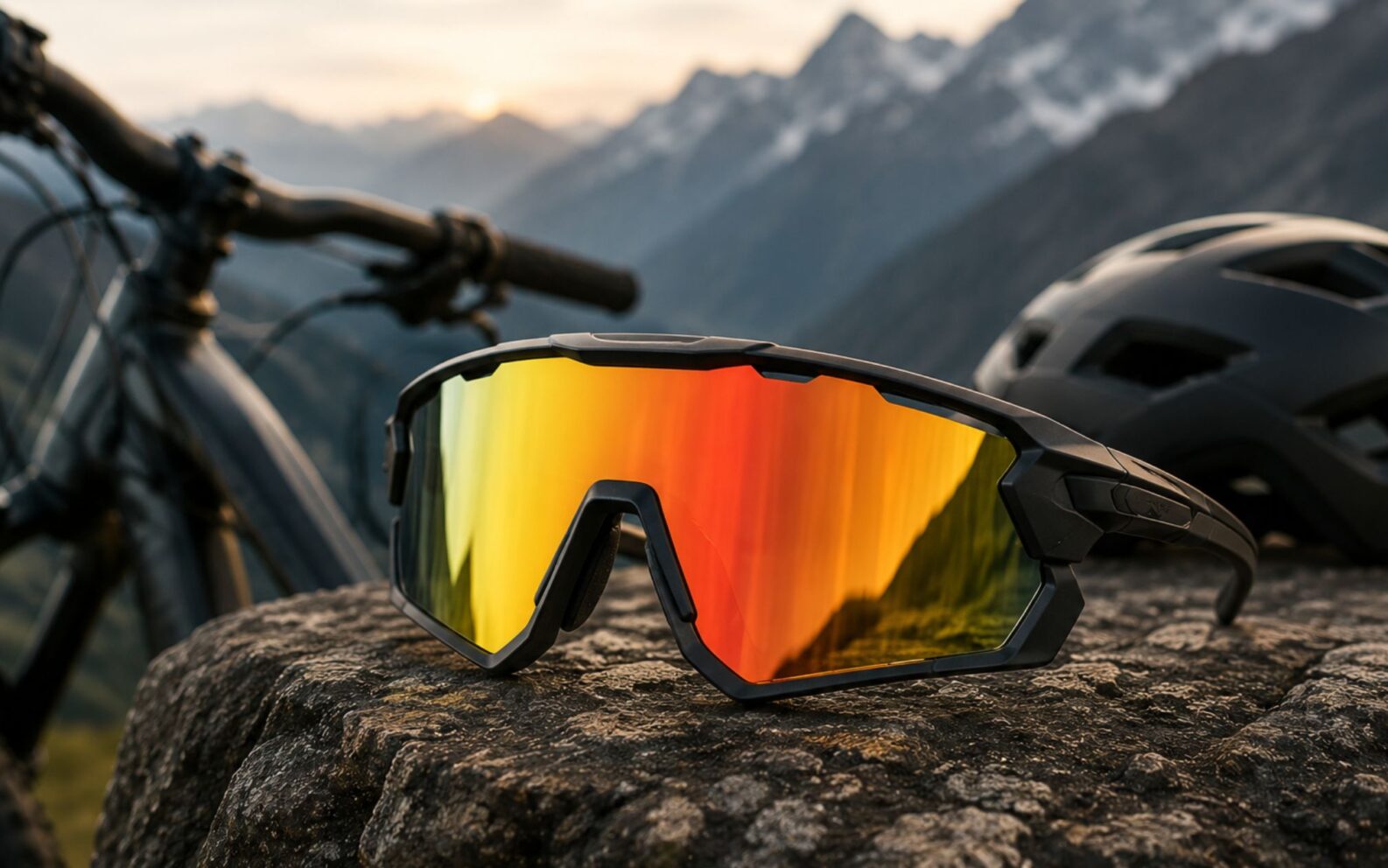
At 80 km/h, your eyes are your most exposed piece of riding equipment.
UV radiation, dust, insects, wind — all of it hits your eyes first. Regular sunglasses are not designed for this. They sit away from your face, letting wind blast around the frames. The UV protection in fashion sunglasses varies wildly. And most standard lenses shatter on impact rather than flexing.
Sports goggles solve all of this. But not all sports goggles are equal — and in the Indian market, the difference between a good pair and a bad pair is often harder to spot than the products themselves make it seem.
This guide covers exactly what to look for, what to avoid, and which options work best for Indian bikers and cyclists.
Why Sports Goggles — Not Regular Sunglasses
https://treknride.com/product/sports goggles-with-lens-frame/
Wraparound Frame Design
Sports goggles have a wraparound frame that sits closer to your face, blocking wind from the sides. Regular sunglasses have open frames that leave gaps — at riding speed, those gaps become wind channels that dry out your eyes and reduce visibility.
Impact-Resistant Lenses
Sports goggle lenses are made from polycarbonate — the same material used in safety glasses. They flex on impact rather than shattering. A stone chip at 100 km/h that would shatter a glass or cheap plastic lens will deflect off a polycarbonate sports lens.
UV400 Protection
UV400 means the lens blocks 100% of UV rays with wavelengths up to 400nm — both UVA and UVB. In India, UV radiation is severe year-round, particularly at altitude. Cheap sunglasses often claim UV protection but provide little or none. Sports goggles from reputable brands include genuinely certified UV400 protection.
Anti-Fog Coating
Without anti-fog coating, your lenses fog up the moment you sweat, ride in humidity, or go through a temperature change. In monsoon riding conditions, fogging without anti-fog coating happens within minutes. Anti-fog-treated lenses maintain clear vision in all conditions.
Sports Goggles for Motorcycle Riding
For bikers, sports goggles serve as an eye protection layer when riding with an open-face or half-face helmet — or as a supplement under a helmet visor for added debris protection.
What to look for as a biker:
- Frame flexibility: the frame should flex slightly to fit against your helmet’s inner padding without gaps
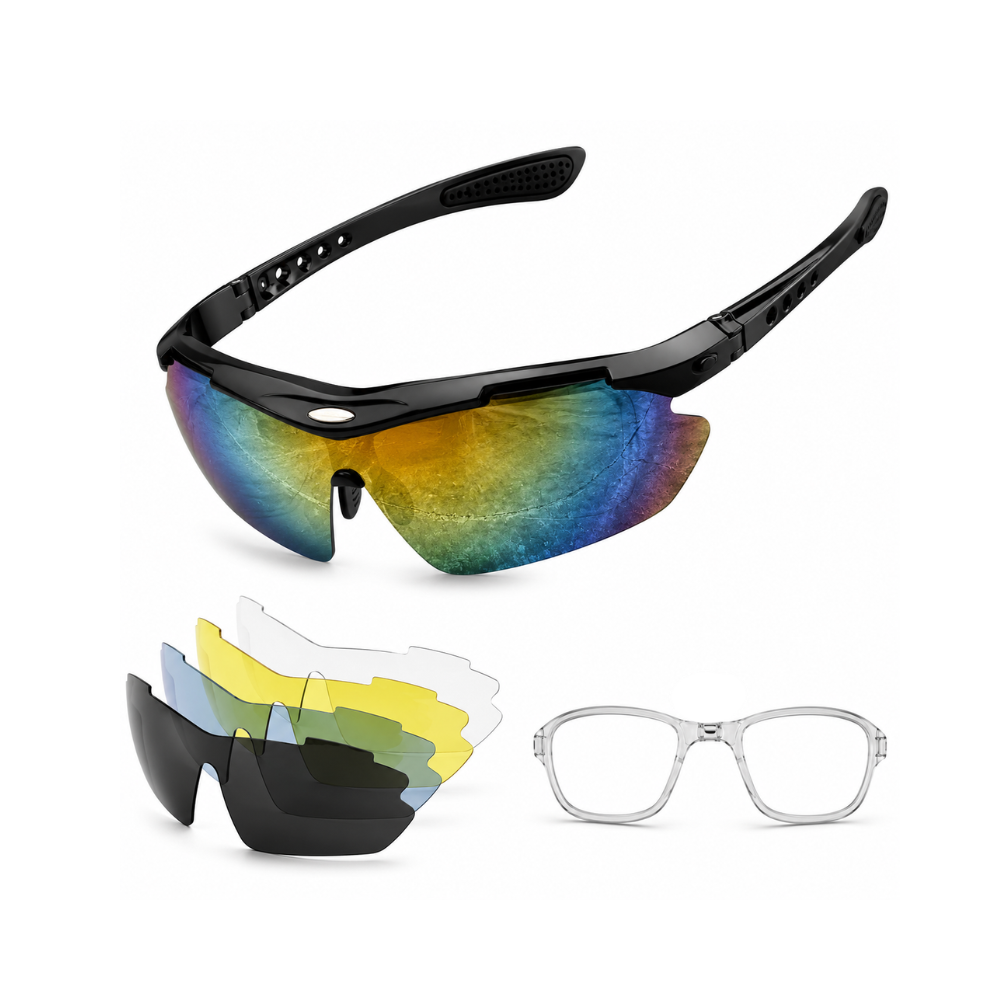
- Lens tint options: tinted for daytime, clear for night riding — interchangeable lens models give you both in one frame
- Scratch-resistant coating: essential for riders, where lens contact with helmet padding causes abrasion over time
- Rubber nose bridge and temple pads: prevents the sports goggles from sliding on sweat during hot-weather riding
Sports Goggles for Cycling
For cyclists, wind and debris protection is the primary need, followed by glare reduction for road riding and UV protection for long training rides.
What to look for as a cyclist:
- Lightweight frame: every gram matters on a bike — look for polycarbonate frames under 30g
- Ventilation: some sports goggle frames have ventilation slots to prevent fogging during high-exertion rides
- Secure fit system: temple arms that grip without pressure points — you’ll be wearing these for 3–6 hours
- Photochromic lens option: automatically adjusts tint based on light conditions — ideal for mixed terrain rides
Understanding Lens Types

Clear Lens
For night riding, overcast conditions, and low-light situations. Maximises light transmission while still providing impact protection and wind blocking.
Smoke / Dark Tint
Standard daytime use. Reduces glare and eye strain on bright Indian summer roads.
Yellow / Amber Lens
For overcast, hazy, or dusty conditions. Increases contrast and definition — popular with bikers who ride through fog or dust-heavy terrain.
Mirrored Lens
Blocks glare from water surfaces and reflective roads. Excellent for coastal riding and monsoon-season roads with water.
Photochromic (Self-Tinting) Lens
Automatically darkens in sunlight and clears in shade. The most versatile single-lens option for mixed riding conditions.
The TrekNRide Daisy Tactical sports Goggles
The TrekNRide Daisy range is built specifically for the conditions Indian riders face: UV400 certified lenses, impact-resistant polycarbonate, anti-scratch coating, and a wraparound frame with rubber grip pads. The Daisy frames come with interchangeable lens sets — meaning one frame handles day and night riding without buying two separate pairs.
FAQ — Sports Goggles for Bikers and Cyclists
Can I wear sports goggles inside a full-face helmet?
Yes, but fit varies by helmet. sports Goggles with a slim wraparound profile generally fit under most full-face helmets without pressing on the nose. Try the fit before your first long ride to ensure there are no pressure points.
What is the difference between UV400 and polarised lenses?
UV400 refers to ultraviolet protection — blocking UV rays. Polarised lenses reduce glare from reflective surfaces like water and wet roads. You can have both features in one lens. For Indian road conditions, UV400 is more critical. Polarisation is a bonus for comfort.
How do I prevent sports goggles from fogging up?
Choose sports goggles with an anti-fog coating. Additionally, avoid touching the inside of the lens with your fingers — skin oils break down anti-fog treatments. If fogging occurs, tilt your head slightly to allow airflow behind the lens.
Do TrekNRide sports goggles come with multiple lenses?
Yes. The TrekNRide Daisy sports goggle frame is compatible with interchangeable lens sets. The standard kit includes a tinted day lens and a clear night lens, both fitting the same frame.