
Wearing a helmet for hours can result in sweaty hair, scalp discomfort, unappealing smell and a dirty helmet.
While lots of people buy high-end helmets, they forget about another simple piece of gear that can make the helmet so much more comfortable to wear—a helmet cap.
If you look online you will see a number of terms such as helmet skull cap, helmet inner cap and helmet liner. These are sometimes confused with one another, so it can be hard to figure out which is best for you.
The reality is that although they are similar in purpose, different types of helmet caps have different advantages in terms of the conditions in which you’re riding.
Here, we’ll clarify the distinctions, compare the features and recommend which one to select for Indian weather and riding conditions.
The benefits of a helmet cap.
Not knowing why riders wear helmet caps is as important as knowing the different types of caps, so let’s start with that.
A helmet traps:
- Sweat
- Heat
- Dust
- Skin oils
This can lead to:
- Helmet odour
- Scalp irritation
- Hair frizz
- Dirty helmet padding
- Reduced riding comfort
A helmet cap forms a barrier of breathability between the rider and the helmet, which helps keep the helmet clean and comfortable during the ride.
A Helmet Skull Cap is what

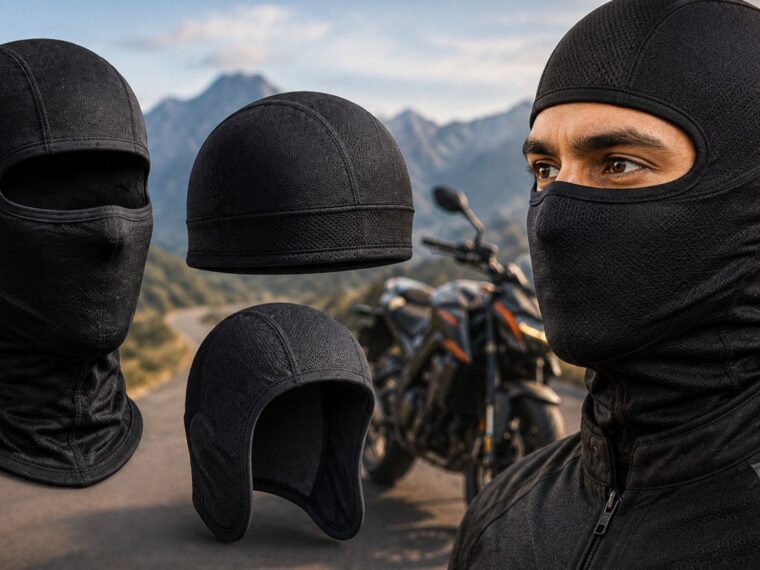
Helmet skull cap is a lightweight cap that fits under a motorcycle helmet.
It is intended to mainly:
- Absorb sweat
- Reduce friction
- Improve helmet comfort
- Keep hair in place
This is due to its slim design, which allows it to fit easily into nearly any motorcycle helmet.
Helmet skull caps are especially popular among:
- Daily commuters
- Summer riders
- Delivery riders
- Office commuters
What Does a Helmet Inner Cap Do?
A helmet inner cap, or helmet liner, is a wider term that encompasses moisture-wicking performance caps, specifically for long rides.
Many contemporary inner caps have the following characteristics:
- Quick-drying fabric
- Better ventilation
- Moisture management
- Antibacterial treatment
- Improved breathability
They are best for riders that wear a helmet for many hours at a time.
Helmet Skull Cap vs Helmet Inner Cap?
Both have an effect on the comfort of the riding experience but serve slightly different purposes.
The helmet should have a skull cap that is filled with little pieces that are attached to the inside of the helmet.
| Feature | Helmet Skull Cap | Helmet Inner Cap |
| Ability to manage sweat production when exercising | Good | Excellent |
| Breathability | Good | Excellent |
| Wear and tear when moving long distances | Good | Excellent |
| Moisture-wicking | Moderate | High |
| Helmet hygiene | Good | Excellent |
| Travel to work every day | Excellent | Excellent |
| Touring rides | Good – Excellent | Excellent |
| Temperatures of 70° F to 75° F | Good to Excellent | Excellent |
For Indian Riders, which of these is better?
It depends on your riding style.
If you take part, select a Helmet Skull Cap:
- Ride short distances
- Commute daily
- Requires some sweat control but not excessive.
- For a light option
- Looking for an inexpensive choice?
If You: Select a Helmet Inner Cap
- Ride long distances
- Tour frequently
- Sweat heavily
- Ride during summer
- Desire improved moisture management
- Prioritise helmet hygiene
Many riders prefer the performance of a high quality moisture-wicking inner cap, because it is the best overall fit.
Wearing a helmet cap is beneficial to you for the following reasons:

Whatever style you select, a good helmet cap has a number of benefits.
Better Sweat Management
Absorbs sweat before it gets to the lining of the helmet.
This helps to keep the scalp and helmet dry.
Improved Helmet Hygiene
This maintains a reduced amount of sweat in the helmet padding, which reduces odours and bacterial build-up.
Hair Protection
A smooth fabric layer decreases the amount of friction between your hair and the helmet.
This helps minimise:
- Hair tangling
- Frizz
- Static
- Hair breakage
Greater Riding Comfort
Helmet caps make a more streamlined fit in the helmet and can help minimize pressure points during prolonged rides.
Longer Helmet Life
A cleaner interior on the helmets should require less deep cleaning and thus extend the life of the removable pads.
For the most part, it is quite easy to identify the most suitable helmet cap.
These are things that you should think about before purchasing.
Material
Look for:
- Moisture-wicking fabrics
- Dry-fit polyester
- Microfiber
- Bamboo blends
Materials are appropriate for the Indian climate.
Fit
The cap should be tight and not be tight fitting.
A loose cap may slide around during the ride and a tight cap will be uncomfortable.
Breathability
Long rides can be hot, and proper ventilation can reduce the impact of this.
Easy Maintenance
Choose a cap that is:
- Machine washable
- Quick drying
- Folds easily, even after many washes.
Riders’ Pitfalls
Try to steer clear of these bad habits.
- Repeatedly wearing a dirty helmet cap
- If you have wet hair, wear the helmet so that it does not dangle.
- Thick fabrics are recommended to be worn in summer.
- Failure to clean the helmet liner.
- Use of poor quality insulating materials.
Comfort and a longer lifespan of the helmet is the key to riding hygiene.
Riders’ reasons for wearing Trek N Ride helmet caps.
Trek N Ride’s riding accessories are specially made for Indian motorcyclists.
It has caps on its helmets suitable for:
- Daily commuting
- Highway touring
- Adventure riding
- Weekend rides
Key Features
✔ Breathable fabric
✔ Sweat-wicking material
✔ Lightweight construction
✔ Comfortable fit
✔ Easy maintenance
Made for Indian climate, Trek N Ride caps for riders provide comfort for short commuting or extended tours in Indian weather.
Which of the following do you like best?
A light helmet skull cap is best for riders who only ride occasionally enough to wear their helmet every day.
If you are riding for extended periods of time, or riding on a regular basis in hot weather, a performance level helmet liner cap will provide better moisture control and hygiene.
In either style, helmet caps are among the simplest modifications you can make to your helmet to make your ride more enjoyable and lengthen the lifespan of your helmet.
Final Thoughts
Sometimes it’s the little riding equipment that can make a huge difference.
A good hat cap can make for more comfort, less sweating, hair protection and prolong the life of your helmet’s interior.
Whether you choose a traditional helmet skull cap or a moisture-absorbing helmet inner cap, it’s vital to have the right gear for every ride to make them cleaner, cooler, and more comfortable.
If you’re seeking a reliable fit in Indian riding weather, Trek N Ride provides every-day commuting and long-distance touring helmet caps.
Frequently Asked Questions
1.Helmet skull cap is the same as helmet inner cap.
Helmet skull cap is one of the inner caps for helmets. The current trend in inner caps is to add additional moisture removal and performance characteristics.
2. If you are riding during the summer which is better?
Moisture-wicking helmet inner caps perform better during warm weather because they are able to absorb more sweat.
3. Does helmet caps impact safety of the helmets?
No. If the helmet fits snugly and correctly then a thin cap will not compromise the protection of the helmet.
4.About how many times is it necessary to wash the helmet cap?
Clean it every couple of rides or more frequently in warm weather to ensure it stays good and clean, and to reduce odours.
5.Where is it allowed, can I wear a helmet cap with any kind of motorcycle helmet?
Yes. The majority of helmet caps will fit both full-face, modular and open face helmets, as well as half helmets.
6. Should a helmet cap be purchased by commuters every day?
Yes. It will decrease the amount of sweat, make the helmet cleaner, more comfortable to wear, and make riding more enjoyable.